The Craftory Journal
Haldi Outfits for Guests: What to Wear and Why
A thoughtful guide to choosing a Haldi guest outfit with joyful color, easy movement, and practical care for a daytime celebration.
A Haldi ceremony has its own wonderful rhythm: daylight, family, laughter, color, photographs, and often a little turmeric in the air. As a guest, the aim is not to find the most elaborate outfit in the room. It is to arrive in something festive, respectful, and easy enough to enjoy every unscripted part of the celebration.
That usually means planning around the invitation first, then thinking about color, movement, fabric, and the setting. A Haldi at home can feel very different from a garden gathering or a polished hotel event. There is no single uniform, and that is part of the charm. A considered saree, sharara, lehenga, anarkali, kurta set, or Indo-Western look can all feel exactly right when it suits the people hosting and the way the day will unfold.
Start with the invitation, not a color rule
The best Haldi outfit begins with the couple's guidance. Look for a stated palette, a note about traditional dress, the time of day, and the venue. Some families love a sea of marigold and yellow. Others reserve a particular shade for the couple, wedding party, or immediate family. If the invitation is quiet, it is completely appropriate to ask someone close to the celebration whether the gathering will be relaxed, formal, outdoors, photo-led, or likely to include turmeric rituals.
Your role can shape the decision too. Family members may be coordinating closely, while most guests have more freedom to dress with personality. The generous approach is to dress with joy without trying to match or outshine the people at the center of the day. Let the invitation settle the level of formality, then choose a look that feels like you. That will read far more naturally than chasing a generic formula.
Haldi and mehndi are sometimes spoken about together, but their practical details can differ. A mehndi may involve time for henna and richer color play. A Haldi often calls for extra thought around daytime heat, seating, movement, and the possibility of turmeric. If you are attending both, our mehndi guest guide can help you make each look feel distinct.
Choose color for joy, contrast, and ease
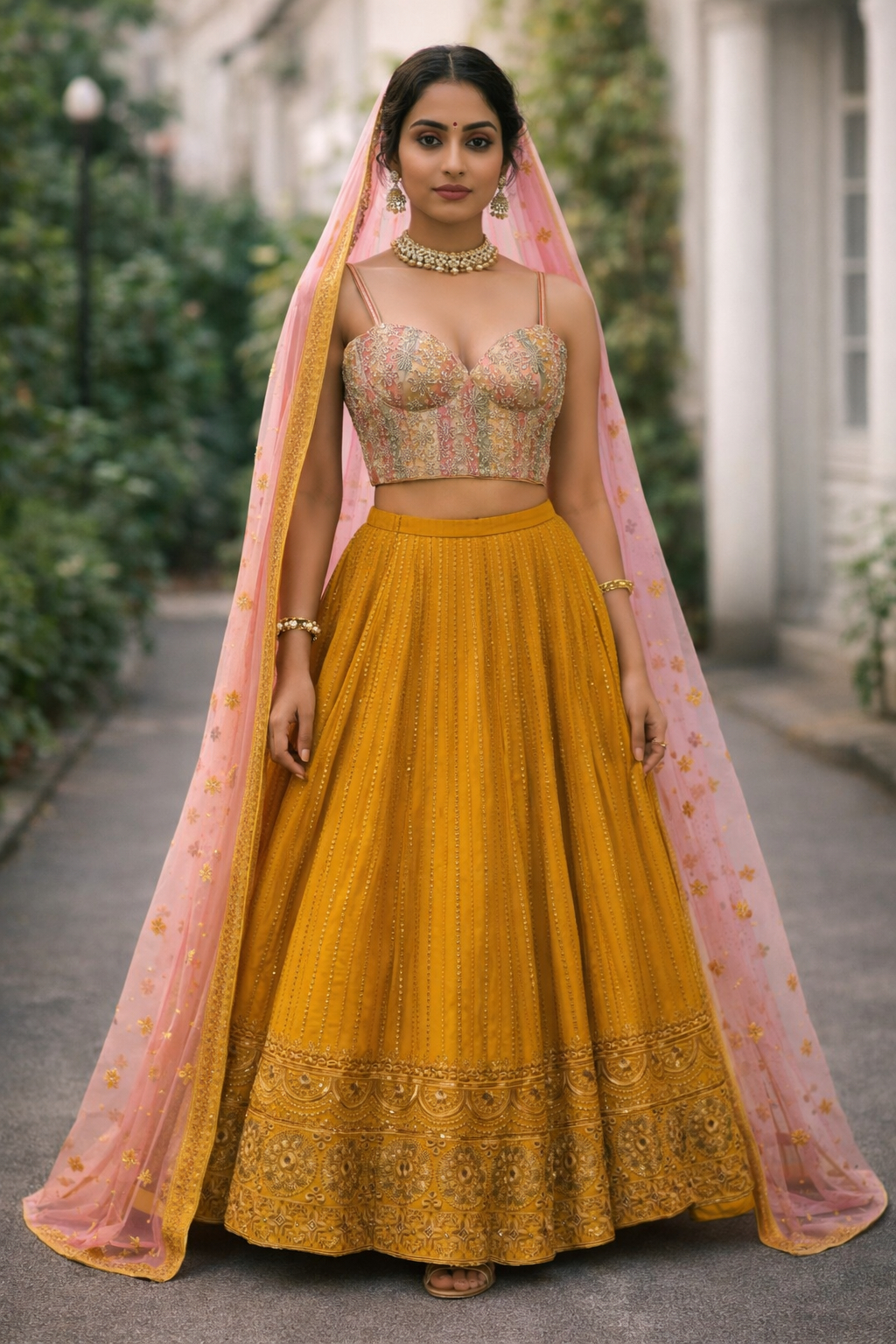
Yellow is a beautiful Haldi choice, but it is not the only one. Marigold, saffron, mango, warm orange, coral, pink, fresh green, and floral prints all carry the warmth of a daytime celebration. A richer shade can feel especially helpful when you expect to be moving between a lawn, courtyard, garden, or bright room. It brings presence to photographs while being a little less precious about the realities of the day.
Think in a color family rather than one fixed shade. A butter-yellow kurta can pair with coral earrings. A mango sharara can pick up green through the dupatta border. A pink or orange saree can feel celebratory with a marigold floral accent. Those small relationships are enough to make a look feel deliberate. You do not need every element to match perfectly, and you do not need to choose yellow just because the ceremony is called Haldi.
Very pale ivory, white, or delicate dry-clean-only looks deserve a pause if the ceremony includes close participation in the turmeric ritual. They can still be appropriate when the hosts have requested them, but the practical question matters: will you be relaxed in the outfit, or worried about every hug, photo, and spontaneous moment? A festive print, warm border, or more saturated color often gives you more freedom.

Let the silhouette support the real day
Haldi is often more active than it first appears. You may remove your shoes at a home, sit low for photographs, move around family members, walk over grass, or stay longer than planned because the day is simply too joyful to leave quickly. Choose a silhouette that gives you room to breathe, sit, reach, and walk. If it only works while standing still, it will not feel like a good choice halfway through the celebration.
A light lehenga is lovely when you want softness and movement, especially with a blouse that feels secure through the shoulders and a dupatta that has been tested before the day. A sharara or relaxed kurta set gives generous movement without losing polish. An anarkali brings easy vertical drama, while a saree can be elegant and light when the drape is set comfortably. Clients who prefer a cleaner line may enjoy an Indo-Western silhouette that keeps the mood celebratory with less to manage.
Do a small movement check at home: sit down, lift both arms, take a longer stride, and turn as though someone has called you into a photograph. Notice whether the waistband stays comfortable, whether the hem catches underfoot, and whether the dupatta needs constant attention. This is not unglamorous preparation. It is how a beautiful garment continues to look effortless after the first picture.

Choose fabric with the venue in mind
Fabric changes the feeling of a daytime look. A breathable cotton blend, soft silk blend, georgette, chiffon, organza, or lightly embroidered fabric can be beautiful when the celebration is warm or outdoors. The best choice is not about a rule that one fabric is more festive than another. It is about whether the material lets you feel composed through the temperature, travel, and length of the gathering.
Texture can create occasion without adding weight. A fine embroidered border, a woven stripe, floral threadwork, a printed dupatta, or a little antique-gold detail can make a simple silhouette feel special. If the garment itself has dense embroidery, edit the rest of the look. If the garment is clean, let an earring, a flower, or a beautifully finished dupatta bring the energy. One lead detail is usually more elegant than trying to make every part compete.
If you are unsure about formality, the venue is a useful clue. A family home or daytime lawn often rewards lighter fabric and easier shoes. A formal hotel gathering may invite a more tailored line, finer textile, or slightly stronger jewelry. The hosts' preference still comes first, but the setting helps you choose a level of richness that feels at ease rather than overworked.
Make turmeric part of the practical plan
Turmeric is not something to fear, but it is worth acknowledging. Ask whether guests will be part of the ritual, whether the ceremony will happen before or after photographs, and whether the event has a relaxed change-of-clothes mood. Those answers may lead you toward an outfit that is washable, a little less delicate, or simply one you will not mind wearing fully.
Practical does not mean casual. A joyful printed set, a saree with a warm border, or a polished Indo-Western piece can still feel celebratory while being easier to wear than a very pale, heavy, or extremely precious garment. Bring a small pouch with safety pins, blotting papers, and a backup hair tie if the day is outdoors. These tiny choices let you keep your attention on the people, not the outfit.
If you are attending multiple wedding events, save the most demanding fabric and tallest heel for the moment that actually suits them. The sangeet guest guide is a useful next read for an evening look with more sparkle and dance-floor energy. Giving each event its own styling logic is much more interesting than repeating the same formula all weekend.
Finish with accessories that stay easy
Haldi accessories work best when they feel light and intentional. Floral jewelry can be lovely when it fits the family's mood, but it is never a requirement. Small jhumkas, a warm-metal earring, a stack of slim bangles, a delicate hair detail, or a compact potli can be enough. If your garment has lively color and embroidery, let the accessories soften into support.
Shoes should match the actual route you will take. Embroidered juttis, refined flats, low sandals, and low block heels tend to be more useful than a very high heel, especially on grass, uneven stone, or at a home where shoes may come off. Check the hem with the exact pair beforehand. A beautiful shoe is only doing its job when it helps you walk naturally.
A dupatta deserves the same thought. Decide whether it will sit on one shoulder, be lightly pinned, or be set aside during a hands-on ritual. A secure drape lets you hug, eat, greet, and move without arranging fabric every few minutes. When you want to bring a familiar garment into a new color story, a piece from the designer dupatta collection can add warmth and craft without requiring an entirely new outfit.

A simple Haldi guest outfit checklist
- Read the invitation for color, formality, and family guidance before choosing a look.
- Choose a warm color, print, or border that feels festive and easy to wear.
- Test the outfit by sitting, walking, reaching, and turning before the celebration.
- Let fabric and footwear suit the actual weather, venue, and surface underfoot.
- Ask whether guests will join the turmeric ritual, then dress with that information in mind.
- Keep jewelry, shoes, bag, and dupatta light enough to support the day rather than distract from it.
Dress for the celebration, then make it your own
The best Haldi outfit is not a costume or a color rule. It is a way of joining the day with care. When the silhouette feels easy, the color feels joyful, and the details are resolved, you can be fully present for the laughter, blessings, photographs, and family stories that make the ceremony memorable.
At The Craftory Couture By Rimi, clients can begin with the Indian occasionwear collection, browse designer sarees, or book a personal consultation when an event, fit, or styling brief deserves a more individual conversation. The goal is always the same: a look that carries the celebration beautifully and still feels entirely your own.
Frequently asked questions
What should a guest wear to a Haldi ceremony?
A light saree, sharara, anarkali, kurta set, lehenga, or polished Indo-Western look can all be lovely. Start with the invitation and family guidance, then choose a festive outfit that you can move, sit, and celebrate in comfortably.
Do guests have to wear yellow to a Haldi?
Not usually. Yellow and marigold are natural choices, but saffron, coral, orange, pink, green, and floral prints can be just as appropriate. Check whether the couple has requested a palette, especially if the wedding party is coordinating a specific color.
What fabrics are best for a Haldi guest outfit?
Choose fabrics that feel comfortable in daytime conditions and that you will not be anxious about wearing. Cotton blends, chiffon, georgette, silk blends, and lightweight embroidered fabrics can all work well depending on the venue and the event's formality.
Can I wear white or ivory to a Haldi?
Ask first. Very pale outfits can be impractical if turmeric paste is part of the celebration, and some families may have color preferences for the couple or wedding party. A warmer color, print, or outfit with a stronger border is often the easier choice.
What shoes should I wear to a Haldi ceremony?
Choose shoes you can walk and stand in on the actual surface. Embellished flats, juttis, low sandals, and low block heels are usually easier than a very high heel, especially for a garden, home, or daytime gathering.